Modi-Xi-Putin bonhomie, car diplomacy, gala dinner, Pahalgam condemnation and New Delhi Declaration: Brics Summit key takeaways

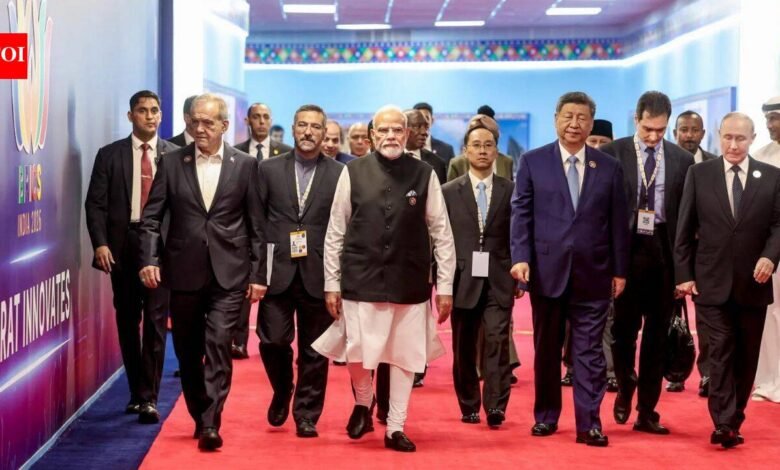
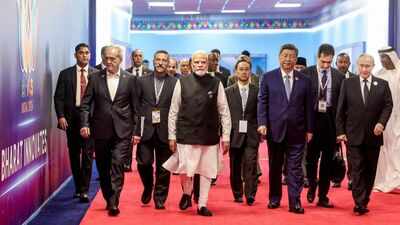
NEW DELHI: India hosted the 18th Brics Summit in New Delhi on September 12-13, bringing together leaders of the expanded 11-member grouping for discussions on global conflicts, terrorism, trade, energy, technology, climate change and reform of international institutions. India used its 2026 chairship to push a people-centric agenda centred on resilience, innovation, cooperation and sustainability.The summit was marked by high-level bilateral meetings, visible displays of bonhomie among leaders and efforts to bridge differences over the conflicts in West Asia and the Black Sea region. PM Modi held separate meetings with Russian President Vladimir Putin, Chinese President Xi Jinping and Iranian President Masoud Pezeshkian, while leaders also participated in the Brics Business Forum and other summit engagements.From PM Modi and Putin travelling together by car inside the Bharat Mandapam complex to PM Modi and Xi sharing warm moments and the leaders participating in a gala dinner and cultural engagements, the summit combined diplomacy with symbols of Brics unity.The summit culminated in the adoption of the New Delhi Declaration, a 45-page document containing 140 points that brings together the grouping’s positions on terrorism, unilateral military action, West Asia, global governance, trade, sanctions, energy, finance and development.
PM Modi-Xi bilateral: Boundary question and reset in ties
PM Modi and Chinese President Xi Jinping held a bilateral meeting on the sidelines of the summit, with both sides stressing the importance of viewing India-China relations from a strategic and long-term perspective.The two leaders committed to seeking a fair, reasonable and mutually acceptable solution to the boundary question. PM Modi stressed that differences should not become disputes and highlighted the importance of mutual respect, mutual sensitivity and mutual interest.The discussions also covered peace and tranquillity along the border, economic relations, trade imbalances, supply chains and people-to-people exchanges. The meeting came as New Delhi and Beijing seek to stabilise bilateral ties while continuing to manage differences over the boundary.The Modi-Xi meeting was one of the summit’s most closely watched engagements, given the strategic importance of India-China relations and their simultaneous participation in an expanded Brics framework.
PM Modi-Putin meeting: Ukraine, West Asia and $100 billion trade target
PM Modi held an over 45-minute bilateral meeting with Putin on the eve of the summit, reviewing the India-Russia strategic partnership and discussing regional and global developments.The two leaders discussed the impact of the Russia-Ukraine conflict and the West Asia crisis on maritime trade and the safety and security of Indian seafarers. PM Modi reiterated that dialogue and diplomacy remained the way forward in resolving conflicts and said India was ready to contribute to peace efforts.Five Indian seafarers have died in the Black Sea amid the Russia-Ukraine hostilities, making maritime safety an important concern for New Delhi.The two sides also discussed defence, energy, critical minerals, civil nuclear cooperation, fertilisers, infrastructure, technology and industrial cooperation. India and Russia agreed to work towards taking bilateral trade to $100 billion by 2030.Putin also invited PM Modi to Russia for the 24th India-Russia Annual Summit. The dates will be finalised through diplomatic channels.
Car diplomacy: PM Modi and Putin travel together
After their bilateral meeting, PM Modi and Putin travelled together in the same car inside the Bharat Mandapam complex before attending the Brics Business Forum.The unusual visual quickly became one of the defining moments of the summit, highlighting the close nature of the India-Russia relationship amid continuing geopolitical pressure on Moscow and India’s effort to maintain strategic autonomy.PM Modi later highlighted the growing India-Russia economic relationship, including the participation of companies from both countries at the INNOPROM industrial exhibition held at Bharat Mandapam.
Thirukkural gift: PM Modi presents Putin Russian translation
PM Modi presented Putin with a Russian translation of the Thirukkural, the classical Tamil work attributed to poet-saint Thiruvalluvar.“Two thousand years ago, Thiruvalluvar wrote the Thirukkural. It includes the entire gamut of human life. It has been translated into the Russian language. I am confident that the people-to-people contact will increase with the translation of the Thirukkural into Russian, which will play a big role in strengthening our relations,” Modi told Putin.The gift was presented as a cultural bridge between India and Russia and reflected the emphasis placed by India on people-to-people links during its Brics chairship.
PM Modi-Pezeshkian talks: West Asia and regional peace
PM Modi met Iranian President Masoud Pezeshkian on the sidelines of the summit, with the two leaders discussing India-Iran relations, Brics cooperation and the conflict in West Asia.PM Modi reiterated India’s position that disputes must be resolved through dialogue and diplomacy and stressed the need for lasting peace and stability in the region.The discussions also covered freedom of navigation and commerce and the safety and well-being of seafarers, issues that have acquired greater importance amid disruption to shipping routes in the region.The meeting followed the leaders’ earlier interaction on the sidelines of the Shanghai Cooperation Organisation Summit in Bishkek. India also stressed the importance of expanding bilateral trade channels and pursuing a long-term and mutually beneficial relationship with Iran.
PM Modi, Xi, Putin and leaders showcase Brics unity
The summit was accompanied by a series of high-profile visuals showing leaders of the expanded grouping interacting informally.PM Modi was seen greeting Putin and Xi together, holding their hands and sharing smiles. In another visual, Modi walked alongside Putin, Xi and Pezeshkian.PM Modi was also seen holding hands and walking alongside Pezeshkian and other leaders during the Brics Business Forum. The images were widely seen as a demonstration of the grouping’s effort to project unity despite differences among members on major geopolitical issues.The presence of leaders from Russia, China, Iran, the UAE, Saudi Arabia, Brazil, South Africa and other member states underscored the diversity of interests represented within the expanded grouping.
Gala dinner: Leaders gather for cultural evening
The Brics leaders also attended a gala dinner hosted during the summit, providing an informal setting for interactions between heads of government and state.The cultural programme and dinner formed part of India’s effort to showcase its heritage alongside the formal diplomatic agenda. The event brought together leaders who had spent the summit discussing contentious issues ranging from wars and terrorism to trade and global governance.The informal interactions added a softer dimension to a summit otherwise dominated by difficult geopolitical negotiations.
Banyan tree plantation: Symbol of Brics unity
A symbolic tree plantation ceremony was also organised during the summit, with Brics leaders participating in the planting of a Banyan tree.The Banyan tree, known for its extensive roots and interconnected branches, was presented as a symbol of continuity, resilience and interconnectedness. The gesture complemented India’s 2026 Brics theme of “Building for Resilience, Innovation, Cooperation and Sustainability”.The plantation also reflected India’s attempt to connect the summit’s diplomatic agenda with sustainability and environmental cooperation.
Brics Business Forum: Trade, investment and technology
The Brics Business Forum brought together heads of state, ministers and business leaders to discuss trade, investment, finance, technology and development.PM Modi highlighted the economic weight of the expanded grouping, saying:“Today, BRICS nations represent 50 per cent of the world’s population, 40 per cent of its GDP, and over 25 per cent of global trade. Moreover, while global GDP has grown approximately two-and-a-half-fold over these years, the combined GDP of BRICS nations has expanded nearly four-and-a-half-fold. In other words, the economic strength of BRICS has grown at nearly twice the pace of the rest of the world.”“The growing scale, speed, and optimism of BRICS are clearly evident among us. This forum, hosted in India, is the largest BRICS Business Forum to date,” the Prime Minister added.Pezeshkian called for Brics to convert its economic potential into practical cooperation through trade, investment and joint financing.“We believe that the true strength of BRICS is not confined merely to the size of its members’ economies; rather, it becomes more apparent when these capacities are transformed into a network of trade, investment and joint financing – a transition from potential cooperation to operational one,” he said.Putin stressed the importance of business-to-business relations and economic partnerships, arguing that they could help create more resilient international economic relations.
Putin attacks trade restrictions, backs new growth platform
At the Business Forum, Putin criticised what he described as attempts by Western competitors to regain their former economic leadership.“We have always been told that competition is a sacred cow, something that must not be touched,” Putin told a BRICS business forum event. “Yet, unfortunately, today your Western competitors are trying by any means necessary to regain their former leadership.”“This competition is sometimes assuming unsightly forms,” he said. “They even include direct physical attacks or the destruction of industrial and logistical facilities, pipelines, and so forth.”Putin also criticised restrictions on international transport corridors, shipping and trade and called for Brics to contribute to building “a new, sustainable platform for global growth”.
India-Russia economic partnership gets push
The summit also provided an opportunity for India and Russia to discuss expanding economic cooperation amid Western sanctions and geopolitical uncertainty.The two countries discussed the Programme for Economic Cooperation 2030 and cooperation in infrastructure, energy, technology, defence, critical minerals and civil nuclear energy.The sides also explored industrial cooperation in railways and tunnelling, the steel value chain and greater access to the Russian market for Indian exporters.India continues to maintain strong energy ties with Russia, while seeking to expand trade beyond traditional sectors.
Brics pushes practical cooperation across sectors
India’s 2026 chairship focused heavily on converting Brics into a platform for practical cooperation rather than limiting it to political declarations.More than 350 meetings and high-level engagements were organised across approximately 30 cities during India’s chairship. These covered political and security cooperation, economic and financial cooperation, and cultural and people-to-people exchanges.PM Modi said: “It gives me immense pleasure to welcome and greet you all to India. India’s BRICS chairmanship is based on a people-centric and humanity-first approach. Resilience, innovation, cooperation, and sustainability have been our priorities.”“Alongside these priorities, we have placed special emphasis on connecting BRICS cooperation with the common people. With this vision in mind, more than 350 meetings were organised. We had the opportunity to welcome your teams to approximately 30 cities…”
Agriculture: Digital farming and climate resilience
Brics countries agreed on new mechanisms to strengthen agricultural cooperation.These include Centres of Excellence on agro-ecology for research and knowledge sharing on natural, organic and regenerative farming, a Brics Network on Digital Agriculture using artificial intelligence, geospatial intelligence, IoT-enabled monitoring and advanced data analytics, and BRICS AGRIN, a voluntary framework covering agricultural inputs, seeds and genetic resources.The initiatives seek to promote climate-resilient farming and greater technology-driven cooperation among member countries.
Health: Lifestyle, traditional medicine and mental health
The Brics Mission for Healthy Lifestyle was launched along with a roadmap for joint cooperation for 2026-2029, focusing on preventive approaches to obesity and other non-communicable diseases.Members also agreed to establish an Expert Working Group on Traditional, Complementary and Integrative Medicine, covering research, evidence generation, academic exchange, quality standards and protection of traditional knowledge.Mental health cooperation was also strengthened through the Brics Training Hub Network and Network of Centres of Excellence, with NIMHANS India as the coordinating centre.
Energy: Smart grids and storage
Brics adopted guiding principles on energy storage and smart grids and launched a Digital Centre of Excellence for Smart Grids and Energy Storage.The initiative will provide a platform for knowledge sharing, capacity building, policy and regulatory cooperation and pilot projects among member countries.The summit also placed emphasis on energy security, diversified energy sources and equitable energy transitions.
MSMEs and startups: New platforms for businesses
India pushed stronger cooperation for micro, small and medium enterprises and startups.The Brics MSME Cooperation Portal will connect MSMEs, technology centres, trade associations, financial institutions and policymakers across member countries.A Brics Incubator Network will connect startups with incubators in other member countries, while the Brics Startup Innovation Fund is intended to support early and growth-stage startups.
Logistics and global supply chains
Brics members agreed on a Logistics Supply-Chain Cooperation Framework aimed at improving resilience, sustainability and connectivity.The grouping also advanced cooperation on global value chains through the GVC Action Plan 2026-2030, including a Technical Council and joint study.The initiatives are intended to reduce vulnerabilities caused by fragmented supply chains, improve connectivity and promote economic diversification.
Urban mobility and climate-resilient infrastructure
The summit also advanced cooperation on sustainable urban development.A Brics Urban Mobility Hub was established as a platform for technical cooperation and knowledge sharing. Members also adopted voluntary principles on climate-resilient urban infrastructure.An Urban Research and Knowledge Network was established to facilitate cross-border research, peer learning and institutional cooperation.
Skilling, youth and sports technology
India also advanced cooperation on skills and employment through BRICS CONNECT, a voluntary network covering capacity building, social security, women’s workforce participation, employability and digital public infrastructure.The Brics Youth Cooperation Framework 2026 was adopted to provide greater continuity and structure to youth cooperation.Sports technology cooperation was institutionalised through a working group focusing on technical information, research, institutional experience and best practices.
Science and research cooperation
The Brics Science and Research Repository was welcomed as a structured platform for sharing scientific knowledge among member countries.The initiative is intended to strengthen research collaboration and facilitate greater exchange of scientific information across the expanded grouping.
Brics 2026: A wider and more diverse grouping
Brics currently comprises 11 countries: Brazil, China, Egypt, Ethiopia, India, Indonesia, Iran, Russia, Saudi Arabia, South Africa and the UAE.The expansion has significantly widened the grouping’s geographical reach across Asia, Africa, the Middle East and Latin America. It has also brought together countries with different political systems, economic priorities and positions on major international conflicts.India’s chairship therefore focused not only on expanding cooperation but also on finding consensus among members with competing interests.
New Delhi Declaration: Key outcomes
The summit concluded with the adoption of the New Delhi Declaration 2026, following intensive negotiations among members. The 45-page declaration contains 140 points and represents India’s central diplomatic outcome from its 2026 chairship.The declaration addresses terrorism, conflicts, global governance, trade, sanctions, energy, finance, development and the interests of the Global South.
Terrorism: Pahalgam attack explicitly condemned
The declaration strongly condemns terrorism in all its forms and manifestations and calls for “zero tolerance for terrorism”.It specifically condemns the April 22, 2025, Pahalgam terrorist attack, in which 26 people were killed. The declaration also condemns cross-border movement of terrorists, terrorism financing and safe havens.Brics reaffirmed that terrorism cannot be associated with any religion, nationality, civilisation or ethnic group and called for those involved in terrorist activities and their support to be held accountable.The grouping also called for progress towards the adoption of the Comprehensive Convention on International Terrorism under the UN framework.
West Asia: Ceasefire, diplomacy and two-state solution
The declaration expresses deep concern over the continuing escalation in West Asia and calls on all parties to exercise maximum restraint.It stresses dialogue, consultation and diplomacy as the means to address conflicts and calls for the protection of civilians and humanitarian assistance.On Gaza, Brics called for the upholding of a ceasefire, unhindered humanitarian aid and an end to forced displacement of Palestinians. It reaffirmed support for a two-state solution based on the internationally recognised 1967 borders.
Unilateral war condemned
The declaration condemns unilateral military action without naming any country.The language assumes significance because Brics includes members with differing positions on the major conflicts in West Asia and the wider international system.The consensus was reached after negotiations continued into the early hours of Saturday, with India working to bridge differences between members and produce a common position.
UN reform and greater Global South representation
Brics reaffirmed its support for comprehensive reform of the United Nations, including the Security Council.The grouping called for greater representation of developing countries in global decision-making and a more democratic, representative and inclusive international system.China and Russia reiterated support for the aspirations of India and Brazil to play a greater role in the UN, including the Security Council.
Trade: Opposition to tariffs and protectionism
The declaration expresses concern over unilateral tariff and non-tariff measures that distort international trade and create uncertainty for businesses and supply chains.Brics reaffirmed support for a rules-based multilateral trading system centred on the World Trade Organization.The grouping also called for the restoration of a fully functioning two-tier binding WTO dispute settlement mechanism.
Sanctions: Brics rejects unilateral coercive measures
Brics voiced opposition to unilateral coercive measures that it considers inconsistent with international law and the principles of the UN Charter.The declaration calls for such measures to be eliminated and highlights their impact on international economic relations.The position reflects a longstanding Brics push for a more balanced international economic and political order.
Local currencies and cross-border payments
The declaration supports greater use of local currencies in cross-border payments and trade settlements among Brics countries.Members acknowledged ongoing work on interoperability between payment and messaging systems and efforts to facilitate trade settlements and investment in local currencies.The initiative forms part of the wider Brics effort to strengthen financial resilience and cooperation.
Energy security and transition
The declaration calls for stronger energy security through diversified energy sources, resilient infrastructure and stable markets.It also supports just, orderly, equitable and inclusive energy transitions while recognising the differing circumstances and priorities of member countries.Brics backed cooperation involving renewables, nuclear energy, hydropower, hydrogen, fossil fuels and other low-carbon technologies.
Women and inclusive development
The declaration recognises women as leaders, decision-makers and drivers of economic growth and social transformation.It highlights women’s participation in governance, entrepreneurship, employment and peacebuilding and calls for greater financial and digital inclusion.The grouping also emphasised skills development and access to productive and social services.
Tackling organised crime and illicit financial flows
Brics expressed concern over illicit financial flows linked to drug trafficking, firearms trafficking, terrorism financing, human trafficking and organised crime.The grouping called for stronger cooperation between member countries to trace and disrupt criminal proceeds and tackle transnational criminal networks.
The larger message from New Delhi
The New Delhi Declaration combines a strong political message on terrorism, unilateral military action, West Asia and global governance with a broad economic and development agenda.
Share your thoughts in the comments
Be respectful · TOI community guidelines
For India, the outcome represents an effort to demonstrate that the expanded Brics can reach consensus despite major geopolitical differences. The declaration also places India’s priorities of resilience, innovation, cooperation and sustainability at the centre of a wider agenda covering trade, technology, energy, health, agriculture, finance and development.The summit therefore ended with two parallel messages: Brics wants a stronger collective voice in global affairs, while India wants that voice translated into practical cooperation that reaches businesses, communities and ordinary people.